
Trees/Leaves/Time
...a meditation...

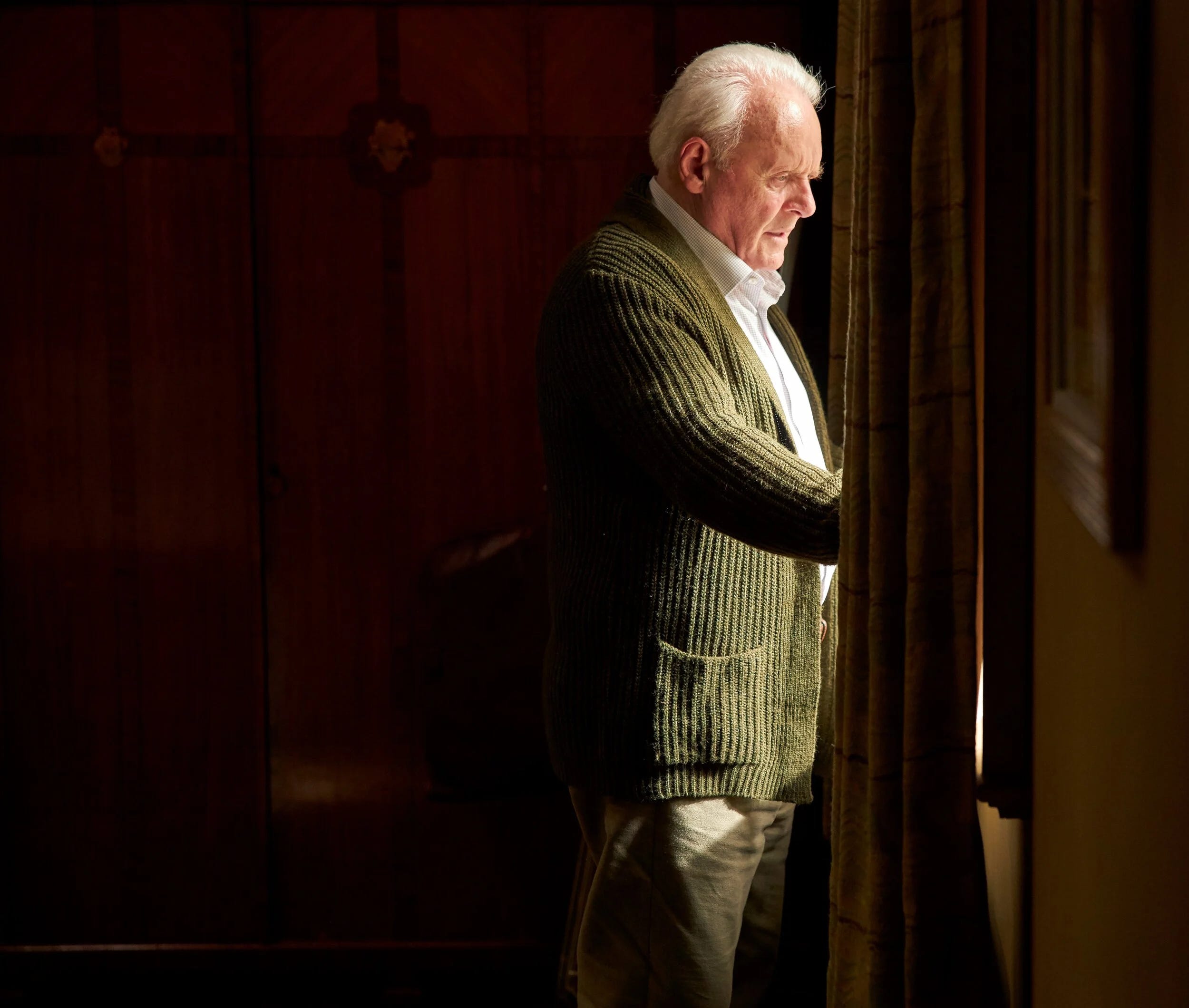
I should be writing something else (so much, always, in the hopper) but I took a chance to watch a film currently free on YouTube, The Father directed by Florian Zeller starring Anthony Hopkins (he garnered his second Academy Award for this role) and Olivia Coleman, among others, and I simply have thoughts needing some form of expression.
While I should say that I intend not to act as a “spoiler” there is a chance I will allow some salient details to “slip through,” however, the film itself is from 2020 and the nature of the narrative (with its wonderfully fragmented chronology) really doesn’t allow for “spoiling” as such. While certain very key details are only revealed to us later, the film itself is meant to put us within a state of confounding temporal flux and thus it would still be worthy of a watch even if one were aware of the “complete plot” for this is a film wherein “the journey is the destination.”
The Father is based on a French stage play (one can make out how this would function as a play in that the entire narrative is set within *mostly* *static* interior space[s]) about Antony, an octogenarian who is succumbing to the ravages of dementia, something that we experience almost exclusively in a “close-third” point-of-view; there are very few moments where the camera is not in the same room as Antony (and in one masterful scene we realize he essentially “was” there). While all elements of the film are astounding, from the performances, the score, and the photography it is really the editing by Yorgos Lamprinos (who was nominated for an Academy Award in that category) where the film displays its majesty.
Before delving further into the picture, I must mention the relative auspicious context which brought me to writing this essay. Recently I have spent some time with one of my classes reading the opening portions of Kant’s Critique of Pure Reason, the section on the “Transcendental Aesthetic” (for which this Substack derives its name) nestled within his opening “Doctrine of Elements and of Method” (much more on that later). Concomitant with this I was invited to a birthday party for one of my godson’s last Saturday, who has just turned five. It was quite the marvelous affair replete with a theme of “gnomes and dinosaur” not to mention a grandfather disappearing only to reappear as a wizard performing magic tricks and a chocolate cake festooned with literal dino-car automobiles.
At one point the “grown-ups” were conversing while the children dug through a sandbox in the backyard seeking geodes and other buried stones as gnomes are wont to do. The conversation moved in and out of various topics (AI, books, movies, the general state of the war) but inevitably it turned to a discussion of time. A few of us had come across a meme which showed the dads of the Rugrats cartoon standing around with the caption saying something like “when you were a kid, these were your friend’s parents–now they’re just you.”
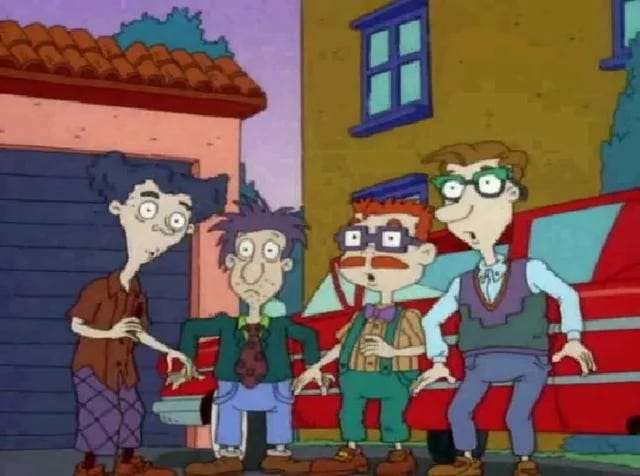
It is frankly disturbing how you really “don’t understand” this until you “are older,” specifically how my godson was now a five-year-old and how we really cannot be sure if things are “getting worse” or if this is simply the spontaneous reaction to the world as one ages. But what struck me at that moment was how just below us, a little to the left, this small and rambunctious cavalcade of children were busily unearthing precious stones and the like and we were essentially discussing them and they were totally unaware.
Or were they?
I suppose one can very easily say that children are not developed enough to shred their focus as well as adults and thus they really were oblivious, and this is more than likely true and/or that their brains are in such a state that they cannot appreciate so many other sights and sounds not “relevant” to the task at hand.

But is that entirely true? I still have some uncanny memories of being that young wherein I (and other children) were hard at the work of play while also paying some attention to adult conversation and realizing I was under discussion in some way. I say these memories are uncanny in that as I’ve aged I have come to appreciate another “texture” about them that was not present to my mind at the time, uncanny in that, like Freud’s notion of the uncanny (something or someone who is ultimately “familiar” but out-of-place, unsettling but not alien) these events and experiences are now “familiar” to me in a new way that they were not before and yet I was “aware” of them at the time—all of it so ordinary and yet still strange.
Abandoning, for the moment, any notions of cognitive development or maturation I believe that at the foundation of these experiences is a rather mysterious truth–while we were all sharing the same space in that backyard we were not sharing, at that moment, the same time.
And time appears to be a far more profound feature of reality than space. Here in that backyard on that Saturday afternoon the children were digging, and the adults were conversing and there was some mutual awareness yet the very quality of time itself (and with it experience, memory, narrative, frame) was utterly distinct. They dug and confronted buried secrets of immense importance, and we conversed and discussed truths that had once been secrets for us. Had I decided to get in the sandbox and help them dig (and I did a little of that) I would still not be engaging with space in their shared envelope of time and had one of them (and many of them are quite precious for their age) started to speak with us a little about our conversation they would, regardless of any amount of sophisticated thinking or articulation, not inhabit our temporal pocket.
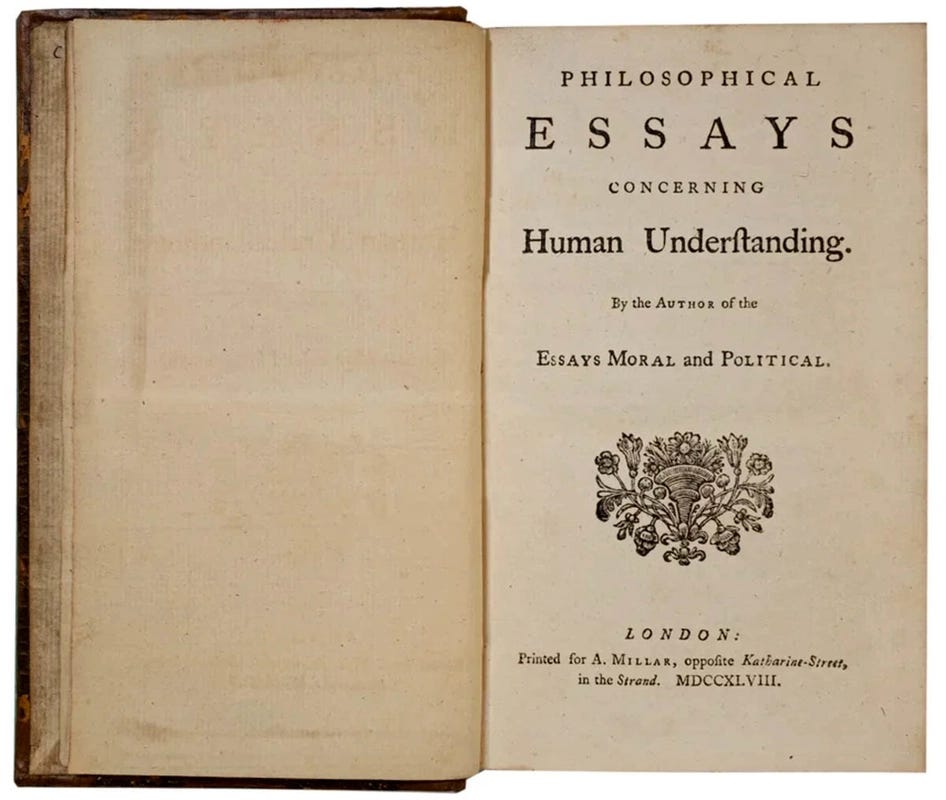
Kant was famously awoken from his “dogmatic slumber” by Hume and his “observation” that empiricism itself cannot be verified as observation itself does not yield proof beyond “constant conjunction.” Simply put, Hume was a true skeptic (or “sceptic,” for those across the pond) who admitted that cause and effect cannot actually be proven by the means which allow us to take notice of “causes” and “effects.” We are simply inferring that when this white billiard ball strikes that red one, the red one necessarily goes in one direction while the white one necessarily goes in the other direction. We take this as a solid and verified truth of reality as such because of the enormous “back catalogue” of instances we draw upon in “history” (personal, social, scientific, et cetera) but we don’t actually see “the white billiard ball causing the red billiard ball to drop into the pocket.” We simply see a “constant conjunction” of events which we link for the sake of pragmatic considerations. The “knowledge” of cause and effect, for Hume, is fundamentally useful and spontaneous but it is not something that the tools of empiricism alone can concretely attest to. Now while Hume was not a rationalist (i.e., the foundational belief that knowledge of the world is acquired through a mosaic of reason, logic, and/or innate ideas independent of the senses) he was also almost “too good” of an empiricist because with his championing of constant conjunction he effectively put the kibosh on empiricism (i.e., the foundational belief that knowledge of the world is based on sensory experience/observation and measurement) as a means to arrive at FULL understanding of the universe. And that was quite the damper for many in his own camp during the enlightenment where the ideological goal was, whether on rational or empirical grounds, to reach full TRUTH of the world.
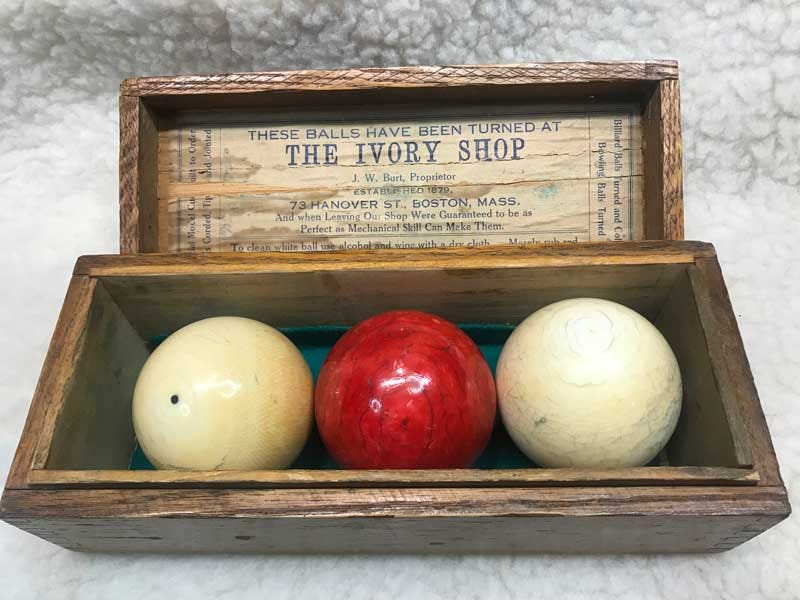
Of course, most of us are happy to simply exist with an unthinking attitude towards cause and effect feeling perfectly certain that the white billiard ball, by way of colliding with the red, did indeed cause the effect of the red falling into the pocket. When events in our life seem to negate such comfortable cause and effect were are more likely to find ourselves mildly amused and simply continue on our way.
This was not so for the Sage of Königsberg. There MUST be a means to ARRIVE at TRUTH with a capital T but, for Kant, Hume was right! Our sense perception, our observations, and our application of observation to measurement as a means to make events meaningful (truthful in such a way as to be certain) is simply not FULLY reliable. So, Kant began his work on The Critique of Pure Reason wherein the “critique” is not some form of criticism or polemic against “pure reason” but a full-on investigation of the very contours, content, and promise of “pure reason.”
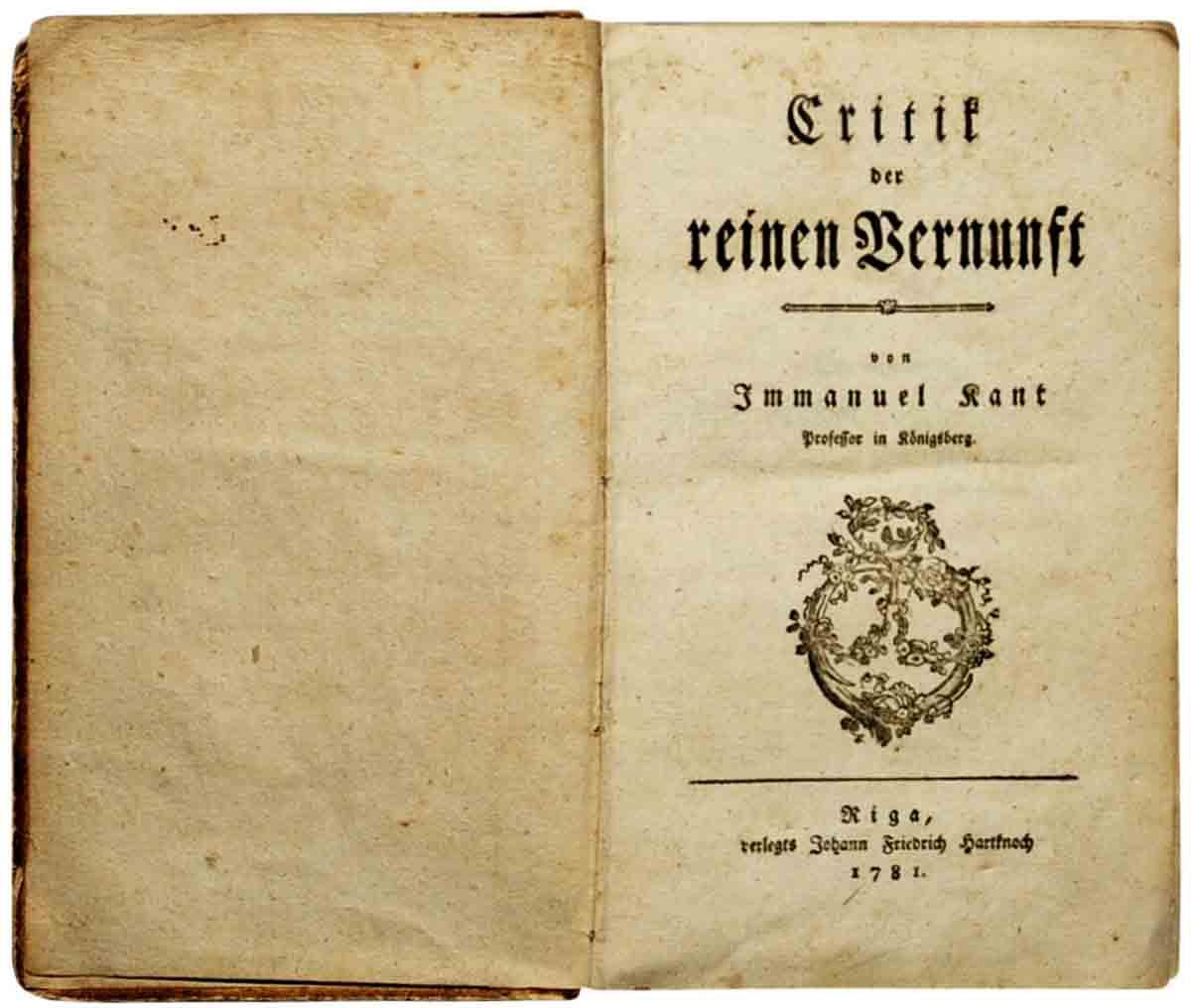
Kant, too, will also incite many to wake up with his notion of Das Ding an sich (The Thing in itself), a theoretical Helen which has yet to cease launching myriads of philosophical ships. In some ways the Ding an sich is far more disturbing than constant conjunction in that it literally does not so much say “we cannot be sure of cause and effect” as it shouts “WE CANNOT BE SURE OF ANYTHING!”
Why?
Because (and here I ask for all indulgences as this is simplified and potentially misread) for Kant “the Thing in itself” can never, ever, be truly known. It’s no longer an issue of “events” lacking a verified causation but of objects themselves receding into a realm of (what I can only think of as) pure mystery.
This discussion for Kant begins with the “Transcendental Aesthetic” which in our case means “ideas necessary for sensory experience” (here “aesthetic” isn’t about beauty or art per se but those faculties which make the appreciation of the beautiful possible). To (again) simplify it greatly in my own language, Kant attempts to step away from every conceivable facet of reality possible as a means to isolate how we can actually experience reality but he concludes that what we cannot step away from (pardon my bodily/metaphorical language here) are time and space.
Space in and of itself doesn’t exist “out there.” We are only aware of space because of objects within space. When we measure space, we are really measuring the space between objects, and we cannot imagine a “spaceless” reality let alone perceive one. Time is even trickier; objects clearly alter with time and some of our own perceptual faculties, most especially our sense of audition, are only possible “in time.” I can take a photo and essentially “freeze” the objects in space and still “have them” visually. But how can I “freeze” music, freeze sound? All I end up retaining is the exact opposite, silence. Audition is simply the most overtly temporally structured sense and of course time clearly shapes our visual perceptions such that I even speak of “freezing” time in a photograph, but a photograph is more like a “second-order” representation of light and the actual scene caught by the camera is a conglomeration of motion, development, and decay, all things only possible in time.
In short, space and time are innate ideas necessary for the possibility of experience itself. You cannot sense and perceive anything (let alone interpret, mull over, or reflect upon) without time and space “sculpting” it “beforehand.” This being the case we can only ever encounter representations and never “things in themselves” (and here I am simply passing over all the controversy Kant raises regarding “synthetic” and “analytic” propositions not to mention a priori and a posteriori knowledge).
Before returning to The Father, it should be noted that many have found Kant’s notions of time and space being merely innate ideas with no existence in physical reality itself wanting in light of various theoretical (and proven) developments in physics.
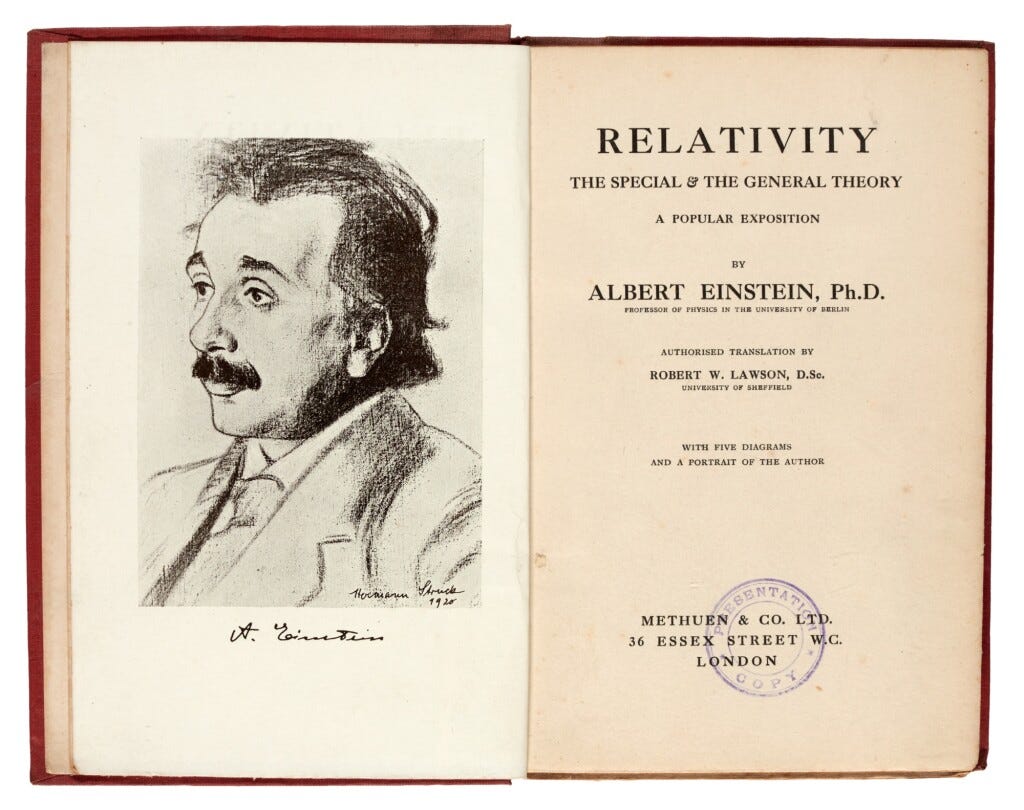
Einstein, with his special theory of relativity, discovered that time itself is relative to the speed at which objects travel in space such that as we approach closer and closer to the speed of light (we can only asymptotically advance towards that constant but never match it and nothing can exceed the speed of light) time slows down or dilates. With his general theory of relativity, he then disclosed something far more bewildering—gravity is simply the relative “deformations” in the “fabric” of “spacetime,” and this leads to gravitational time dilation whereby time likewise slows down as the force of gravity increases. This has led to such speculations as whether or not black holes “stop time” or essentially suck in and masticate time as they effectively do with beams of light.
Both foundational discoveries have been verified many times, but two basic experiments have proven both in very easy to understand ways. The first involved having one atomic clock on earth and one on the space shuttle both perfectly synchronized with each other. When the atomic clock on the space shuttle returned to earth (a vehicle which, at least during the initial rocket phase to reach escape velocity, experiences the fastest speeds that man can create) it was discovered that the clock on earth was “ahead” of the clock returned from space. In another experiment two very similar clocks were synchronized at sea level but while one stayed at the shore the other went up the mountain (obviously not traveling at sufficient enough speeds for any initial time dilation to take place) and after a while, when both were compared it was discovered that the clock at sea level was indeed ahead of that which had enjoyed the alpine air.
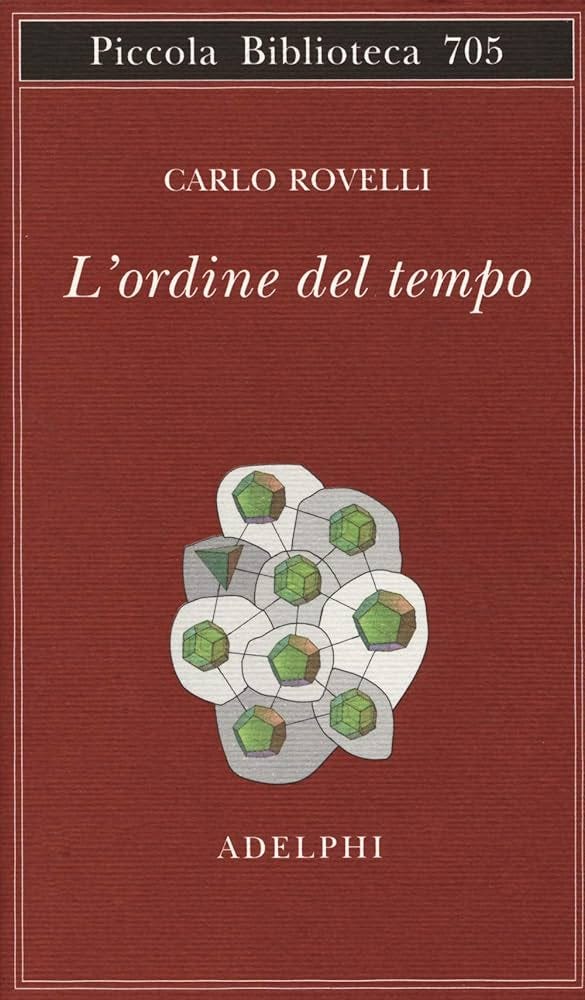
Additionally, as physicist and popular science writer Carlo Rovelli notes in his work The Order of Time, heat and the associated laws of thermodynamics prove time to be a tangible reality at work in the world. In short, heat only flows from a hotter body to a colder one and never the reverse. Rovelli asks us to imagine a pair of films, both watched from somewhere in the middle. In the first we see a ball rolling across a table from left to right, but we do not see the beginning or end of the film thus we have no idea if the film is moving forwards or backwards. But if we were to watch a film of a candle with its wax growing up and the flame mounting towards the sky then we would know the film was playing backwards. The same would be true of a shattered vase reassembling itself. And of course, forgetting the film for a moment we can simply recall our own experiences of, let’s say, our relatively clammy hands encountering the sunbaked surface of a brick wall on a spring day. Regardless of how ice cold your palm may be you will NOT make the wall colder, but your hand will become warmer. Finally, just to really affix my dunce cap (since I doubt this has to at all be said) let us not forget that even those technologies which allow us to create artificial cooling all require the use of power systems which essentially work by channeling engineered heat and they almost always have a component called a heat pump!
So then, is Kant totally disproven?
That depends on how you answer this question; is time only one thing?
I believe there may be as many times as there are human experiences not to mention the theological truths which I hold to dearly that stipulate that time is a) a creation which b) is a gift that c) has its proper place in the created order but which God Himself (as God) is not subject to but master over. Even within the mystery of the incarnation we see eternity grounding the deep reality of Logos. To bring up but one example, during the Transfiguration (Matthew 17, Mark 9, Luke 9) on Mount Tabor Peter, John, and James witness the great “unveiled face” of the Lord as he converses with both Moses and Elijah. This is not some sort of odd “heavenly meeting” but a proof that when both Moses and Elijah spoke face-to-face with God they were doing so with the Second Person of the Trinity. But perhaps even more important for our purposes is this salient fact—Christ is here, in full Glory, literally in a form of ontological “superposition” before “the collapse of the wave function” wherein He is speaking with Moses on Mount Sinai and with Elijah on Mount Sinai (Mount Horeb) while also being witnessed by three of the Apostles at Mount Tabor. All of these “separate events” in space and time take place in that exact and higher form of the present called eternity.
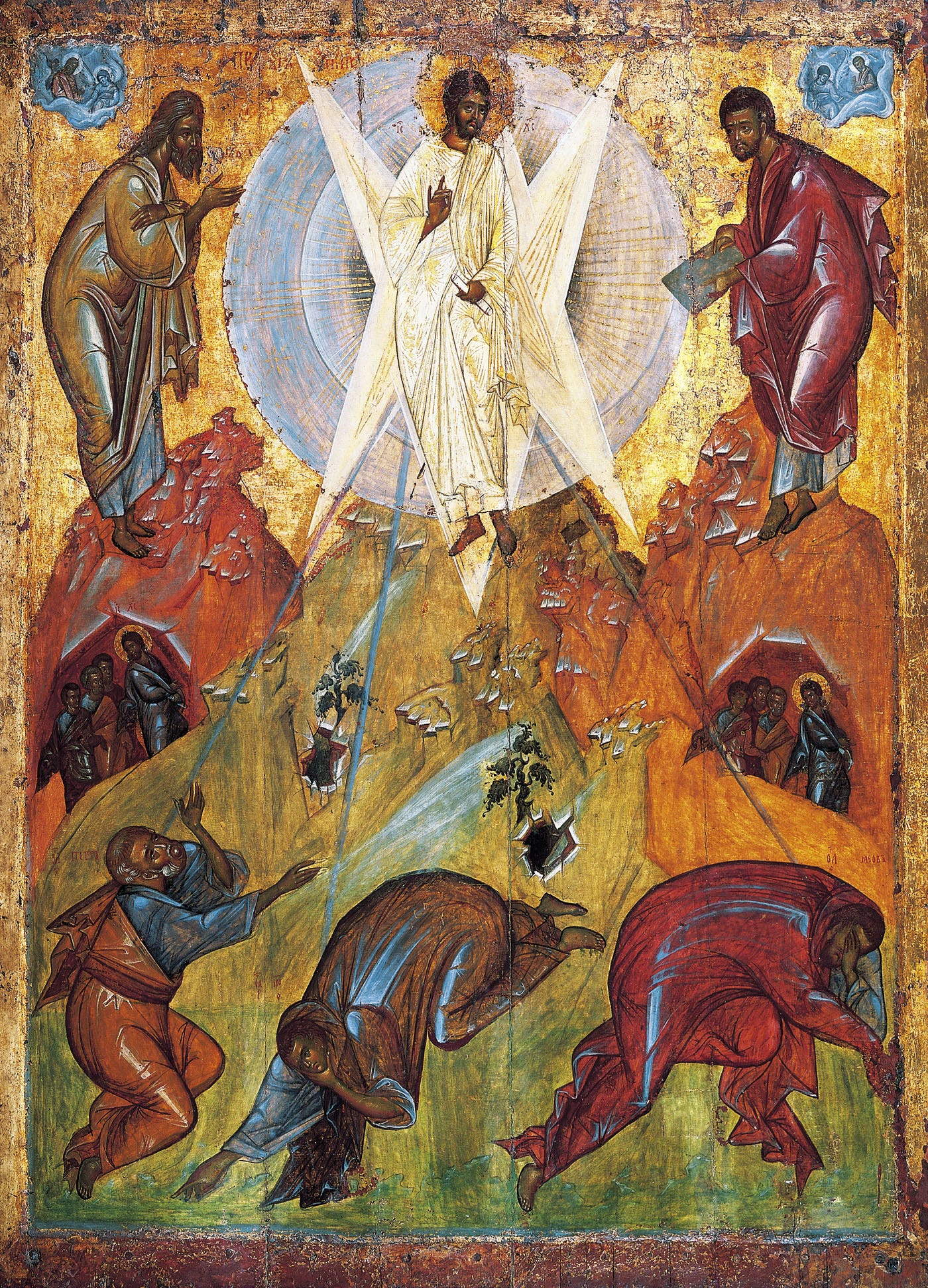
In short, time really isn’t one “thing” and perhaps this allows Kant’s notions to be salvaged. If I might indulge myself a little more before returning to the film The Father (remember that?) I would say we can probably group all temporal realities into three broad categories: Empirically Verifiable Time (EVT), Phenomenological Time (PT), and Ecstatic Time (ET), time literally “standing outside” of itself. EVT is at work in the laws of thermodynamics and Einstein’s special and general theories of relativity, PT regarding Kantian innate ideas (not to mention grand cultural conceptions of time such as Chronos and Kairos, linear time, cyclical time, deep time, et cetera), and ET with the mystical truth of time (glimpses of eternity).
The Father is a film very much shaped around Phenomenological Time, specifically how the distortions of Kantian time provide us with a flash of Ecstatic Time and the underpinning reality of precisely WHAT time is for.
As the film begins we slowly and then immediately become aware of the depths of Antony’s dementia, a dementia which is fundamentally driven by a profound misinterpretation of time leading to concomitant misinterpretations of space, place, and faces. When we first meet him he is having an argument with his daughter Anne (Olivia Coleman) about a topic they have clearly discussed before but which Antony has more than likely dismissed (and forgotten): his need to either endure the help of a caregiver in “his flat” or to live in a home. We are also introduced to what appears to be a somewhat tepid preoccupation Antony has with his oft-missing wristwatch. While the metaphorical weight of this detail might come across as almost blandly transparent the actual weight this small object exerts upon the narrative (or, more precisely, it’s physical absence) is fundamental.
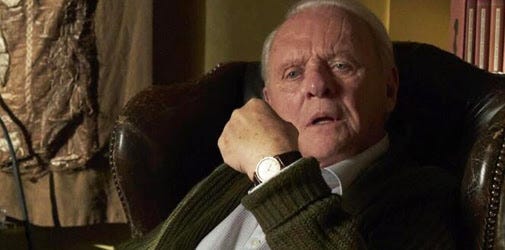
The story continues and we become enmeshed into the temporal chaos (along with Antony) which composes his daily existence; men and women with faces unknown claim to be other people we were sure we have already met, artwork and furniture shifts or disappears, and an eavesdropped upon conversation appears to loop in upon itself impossibly leaving Antony (and us) in a state of profound stress and perplexity. This last bit is perhaps one of the most genuinely shocking moments in the film; first, the scene in question (set during a chicken dinner that paradoxically never seems to begin or end) appears to be one of the very few times where Antony is NOT “in frame” only for it to be revealed he has indeed listened in on his daughter and her husband discussing the potential of bringing him into a nursing home. We are just as surprised as they are to know he has heard everything and assume his expression of a mix of fear, shock, and anger that they are planning to kick him out of “his flat.” However...we then hear the same exact conversation somehow taking place exactly repeated yet without it feeling at all “inorganic” and realize when Antony returns that his face showcases confounding horror, not at the possibility of living in a nursing home but at stumbling upon reality “forgetting” itself.
These moments of hyper deja vu combined with different human beings replacing the same identities and the general state of flux around “Antony’s” apartment make the film more horror than drama while simultaneously inviting us into an experience where time as an innate idea is massively distorted leading to a complete deformation of both time and space. Watching the film closely, it is difficult to claim Antony’s perception is hallucinatory apart from one scene which we are outright informed is a dream sequence and the implications of this are vast. If we are unable to place ourselves in time, then space becomes hopelessly warped such that even the other persons who inhabit it no longer possess consequential identity. This one insight is key to exploring the full dramatic tessellation of the film but first I have to step aside and lapse into my own experience for a time.
Immediately after watching The Father, I took an amble to a nearby park on one of those epic spring days that stretches towards summer but cannot quite reach and attempted to assemble my thoughts. And here I had something of a mystical experience brought about by a “normal” sensory-perceptual encounter.
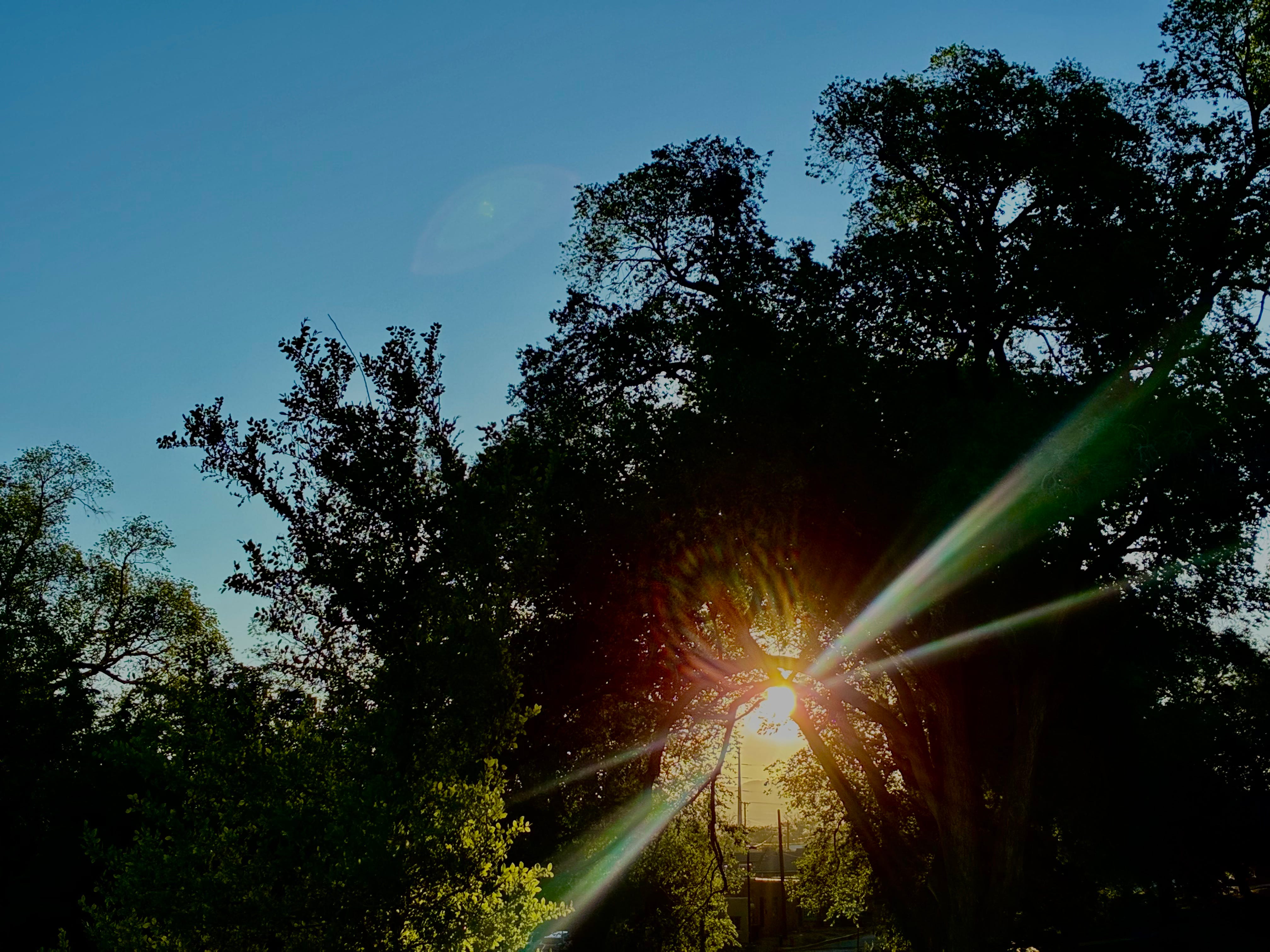
It happened like this—I sat upon the bench, alone, and perceived an odd “flatness” to the reality around me. The crest of the Sandias looming over the houses, the sight of clouds mingling among the leaves, the cars planted beside the curb and the branches agitated by the smallest gesture of breeze all seemed absent of distance and the world appeared like layers of paper ever-so-slightly cascading in space. It wasn’t so much that the “third dimension” disappeared as that it relaxed its grip and I was in what can only be described as a sort of pleasurable phenomenological stupor enjoying a benign befuddlement about the world around me. Even those non-visual elements, such as the jostle of tree limbs and the stabs of birdsong, were near at hand despite being “unseen” (or perhaps all the more so as they were unseen).
And then a jolt deepened it all the more—a bright, but difficult to distinguish, flash of light.
And then more.
It was a small platoon of flying insects, perhaps bees or gnats, interspersed between myself and the greater canvas of reality, each seemingly separate from the other but still colluding. Here there was shock; this whole time my eyes (and to a lesser extent, my ears) had simply imbibed the reality before me in all its static glory and yet, this whole time, there was a cosmos within/without reality, unperceived.
Was this a gift?
Or was it an insult?
As an insult it appears that time came to dismantle my meditation, curtailing it with a simple hint of motion and light which I had not seen despite it being literally right in front of my face, as if to say, “you will never be able to fully embrace even this postage stamp of reality because there will never be enough moments here and now to launch into the depths of the quotidian alone.”
As a gift it appears that time came to enliven my meditation, melding my subjective experience with an ecstatic shudder allowing my mind to stand apart from itself with a simple hint of motion and light which I had not seen despite it being literally right in front of my face as if to say, “you are able to embrace even this postage stamp of reality because there will always be a moment here and now to launch into the depths of the extraordinary.”
And then I heard some voices–some people had come by with their canines to enjoy the time.
Similarly, in The Father the presence of others is also what primarily engenders bouts of confusion or, at least, what causes Antony to declare that “I feel as if I’m losing all my leaves. The branches, and the wind, and the rain. I don’t know what’s happening anymore.” Furthermore, Antony is only reminded of being “leafless” and subject to “the wind” and “the rain” when he encounters other human beings; when he is alone he has no sense that he is no longer living in his own flat or that his daughter Lucy died in an accident (among other “facts of life”).
To put it another way, time is given shape and meaning, is quite literally “sculpted” by others and the truth of Antony’s life (his authentic history/biography) can only emerge with others. His innate sense of time (and its inherent distortions) only become apparent in light of the presence of human beings because only then does time possess “texture” for him. Ironically, this means that it is the very presence, and conspicuous absence (i.e., someone else “appearing” as her) of his daughter Anne which simultaneously allows Antony to arrive and depart from “reality” as such. This is beautifully reified in the narrative by the afore aforementioned wristwatch. In the very few scenes where Antony is wearing his wristwatch Anne is with him and we are invited to view the film from her (non-distorted) perspective, letting the audience know that we are seeing reality as it ought to be. When Anne is not around Antony frequently grabs at his wrist, hoping to find the watch, only to realize it isn’t there. Whenever he accuses someone of stealing his watch it is always another person threatening to take Anne away (her previous husband) or replace her (the home caregivers and/or nurses/orderlies at the nursing home). Lastly, Anne is the only one who actually finds his watch and, more poignantly, the only one who can find it, meaning Anne is the only one through whom Antony is able to touch and feel the visceral texture of time. Without her he can only paw at his wrist in despair.
Which leads to the moving and devastating conclusion where Antony realizes that Anne really does live in Paris now, that he is “alone” in the nursing home, and proclaims he is a leafless tree. Interestingly enough he then confusedly asks the nurse (Olivia Williams) if she knew his mother and we realize Antony has regressed, if not “mentally” then temporally, to childhood, the implication being that without his daughter he must rely on an even more (archetypal) feminine presence to ground him.
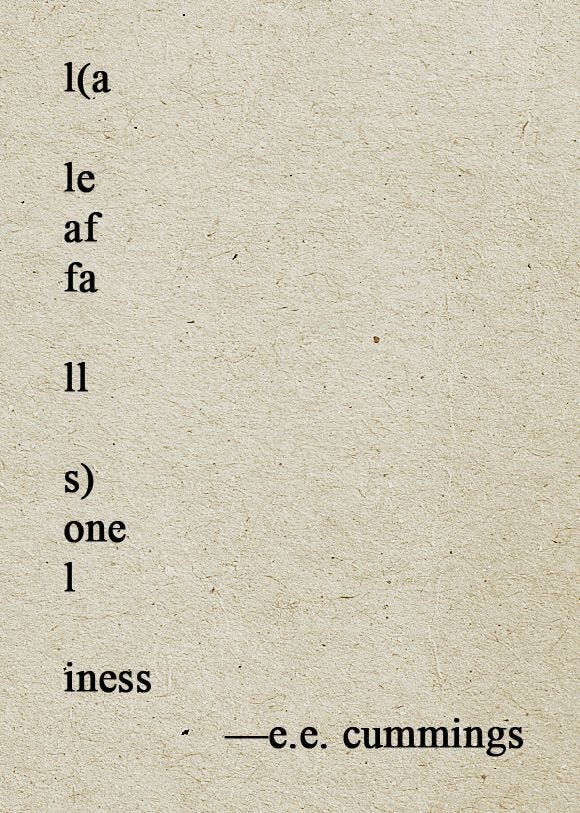
While its image is, in some ways, the inversion I could not help but think of EE Cummings’ concrete poem “[l(a],” which, conventionally scanned, reads “a leaf falls/loneliness.” But the poem fully read literally (visually) enacts the descent of a single leaf from its generative source. Not only does the poem illustrate this precise plunge but the word “one” and the inescapable contours of the digit “1” confront the reader far before she can discern the phrase “a leaf falls” or the word “loneliness.”
Irrespective ([of the reality]) of the afterlife and consciousness beyond bodily death one wonders if Antony is perhaps wrong in thinking he is the barren tree and not the shorn leaf?
Beautifully complex movement in time. Much on which to reflect from different perspectives.